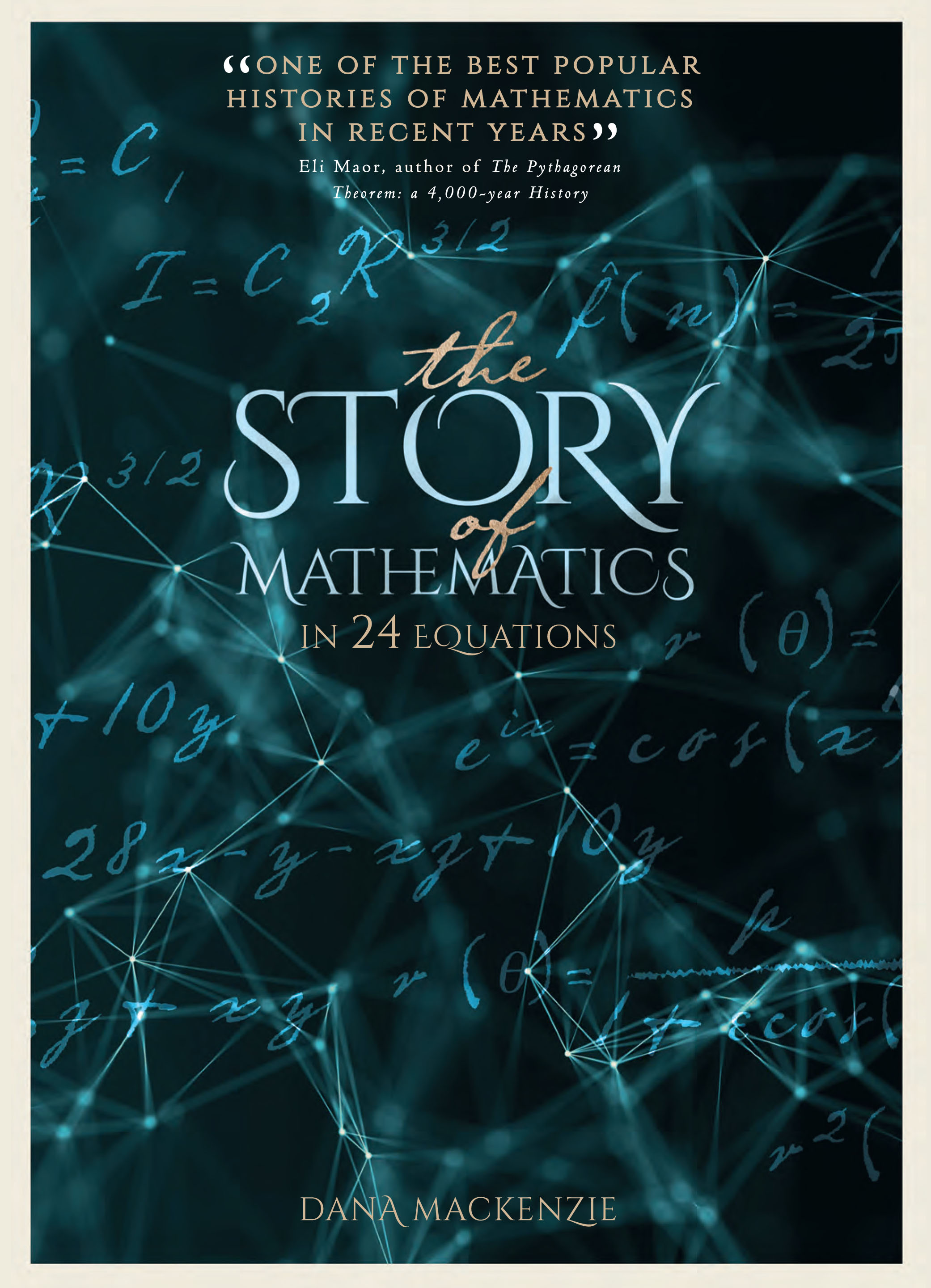

DANA MACKENZIE is a mathematician who went rogue and became a science writer. I am also a National Master of chess, a hula dancer, and a caretaker of foster kittens for the Santa Cruz County Animal Shelter.
I have written or co-written fourteen books, if you count the one coming out this fall: Master Sun’s Problem, the story of a recreational math problem that dates back more than 2000 years. Unlike most math books, it is not about solutions: it’s about the journey to a solution, describing the experience of working on a problem whose solution may take many months to find, or which may not even have a solution.
Previously, I was the co-author, with Judea Pearl, of The Book of Why, a popular introduction to causation in science. Pearl developed a calculus of “causal diagrams” or directed acyclic graphs, which represent human intuitions about cause and effect and can be seamlessly merged with data to answer causal questions.
I live in Santa Cruz, California, with my wife, Kay, cat Max and dog Daisy, along with a revolving cast of foster kittens. In this photo, Daisy is enjoying the ambience of the Santa Cruz Yacht Harbor. (“What ambience?” she asks. “I’m just waiting for my food!”)

Did You Come Here to Play Chess or to Have Fun? is a collection of 40 posts from my chess blog, which received the award for Best Chess Blog of 2021 from the Chess Journalists of America. The book was published in 2025 by New in Chess, and you can read two sample chapters or order a copy at their website.
As the title suggests, Play Chess or Have Fun? combines a light-hearted approach with serious tips on how to improve in chess and how to build a chess community. It includes analysis of games from my 50 years in tournament chess and lots of stories. I believe that most chess books, especially chess instruction, are far too serious. This book ups the fun quotient, while still being useful for those readers who want to know what it takes to become a chess master.
To learn more about my book, listen to my interview on Ben Johnson’s “Perpetual Chess” podcast. See the video version or listen to the audio-only version.
Dana’s Recent Books
Please read Why I Wrote “Master Sun’s Problem,” in the “Latest News” section of this web page.

Master Sun’s Problem tells a story with many surprising twists and turns, about how a college classmate of mine rediscovered a problem that was first encountered in ancient China, and how I unexpectedly (even to myself) solved it. It is also a book-length meditation on mathematics itself, which recounts the joy of discovery that I thought I had forever left behind and the lessons I learned from solving Master Sun’s problem.
Master Sun’s Problem was published in October 2026 by Princeton University Press. You can also order it at Amazon, Barnes & Noble, or at your favorite local bookstore.
“This warm, vulnerable book invites us to explore math—and fall back in love with it—by pulling us deep into an intricate puzzle.”—Steven Strogatz, author of Sync.
Come back to this page for announcements, events, and updates! Also make sure to click on the “Latest News” link in the upper right-hand corner of the page.
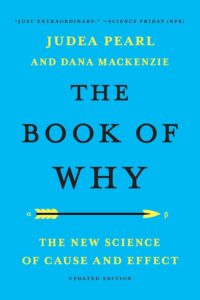 Most humans have no difficulty in their everyday lives organizing their experience into causes and effects. Yet for many years, scientists had no tools for answering questions like “Does smoking cause cancer?” or “Was this heat wave caused by global warming?” In most cases, they ducked such questions, preferring to talk about “correlation” instead of causation.
Judea Pearl’s work has shattered this taboo and shown that questions about causation can be given mathematically rigorous answers. The Book of Why gives a gentle and historically motivated introduction to Pearl’s innovative approach to causal analysis, using causal diagrams and emphasizing three layers of causal reasoning: association, intervention, and counterfactuals.
The new, updated edition discusses some of the changes since 2018 in the world of medicine and science and especially artificial intelligence, where progress in the last few years has exceeded our wildest expectations, and yet “causal AI” is still in its infancy. The updates include a new preface and two new appendices that highlight Pearl’s research since 2018. The main text has not been altered from the first edition, except for minor changes to correct errata.
Previous Events

September 3, 2025. (Online, 5 pm Panama time, 6 pm Eastern time.)
Previous Books by Dana Mackenzie